

Treatment Guides
Travel Planning for Dental Implants in Türkiye
A planning framework for stages, lodging, and communication around dental-implant travel.
LumiVita Editör EkibiApprox. 3 min
Read ArticleLumiVita provides professional travel and process coordination for international patients planning healthcare in Türkiye.
A dental implant is a structure placed into the jaw bone to act as an artificial tooth root where a tooth is missing. Suitability is assessed by a qualified dentist after the jaw bone, gum tissue and general health have been examined. This page explains the general stages and how a trip to Türkiye is planned. Outcomes differ from person to person.

A dental implant is an artificial root structure placed into the jaw bone where a tooth has been lost, intended to take over the supporting role that a natural root would have played. It is made from materials whose biological compatibility has been studied. The tooth you can see in the mouth is not the implant itself: the implant stays within the bone, while the visible part is the prosthetic component fitted on top of it.
That distinction shapes how the whole subject should be understood, because implant treatment is not a single appointment but a plan made up of consecutive stages. Placement into the bone, a healing period, the connective component known as the abutment, and the final prosthetic step are considered as one continuous sequence. The order and the intervals between those stages differ from person to person.
This page is informational only. It does not diagnose, propose a treatment plan or replace an examination, and LumiVita is not a clinic, hospital or physician. You can browse the other subjects we coordinate on our treatments overview.
These terms are often used interchangeably in everyday conversation, yet they address separate situations. An implant deals with the root side of a tooth that is missing. Zirconium crowns, laminate veneers and similar restorations are applied to teeth that are still present in the mouth; on their own they do not replace an absent tooth.
Smile design, in turn, is not the name of one procedure but a planning approach in which the teeth, the gum line and facial proportions are evaluated together. Where teeth are missing, that planning may be considered alongside a separate treatment area such as implants. You can read about the wider subject on our smile design page. Which heading is relevant to your own situation is decided by the qualified dentist who examines you.
People who get in touch for information usually describe the loss of a single tooth, several missing teeth in different parts of the mouth, difficulty adapting to a removable denture used for a long time, or a jaw in which no teeth remain. None of these situations amounts to suitability on its own; making contact is simply the beginning of an assessment process.
For an implant to serve a supporting function, sufficient bone tissue needs to be present in the area where it would be placed. The length of time that has passed since the tooth was lost can affect the bone volume in that region. Bone height, bone width and the distance to neighbouring anatomical structures are core topics of the clinical assessment.
Where there is gum inflammation, advanced gum disease, untreated decay or fractured older restorations, these are usually addressed before anything else. Dealing with the existing condition inside the mouth is one of the most common reasons a total timeline turns out differently from the first estimate.
Chronic conditions that are not well controlled, the use of blood thinners or medication affecting bone metabolism, a history of radiotherapy and other circumstances that may influence healing can all change the plan. This is why sharing your full medication list and existing diagnoses at the first conversation matters for a sound assessment.
Implant planning requires the three-dimensional structure of the bone to be examined. Any imaging considered necessary, along with impressions and intraoral records, is taken only at authorised healthcare facilities and according to that facility's own protocol. LumiVita does not take, interpret or evaluate such records; it only helps information and documents move between the parties in an orderly way.
If you already hold imaging or reports from an earlier date, sharing them at the first point of contact may shorten the back-and-forth. Whether existing records are sufficient, and whether further imaging is needed, remains a decision for the relevant healthcare facility.
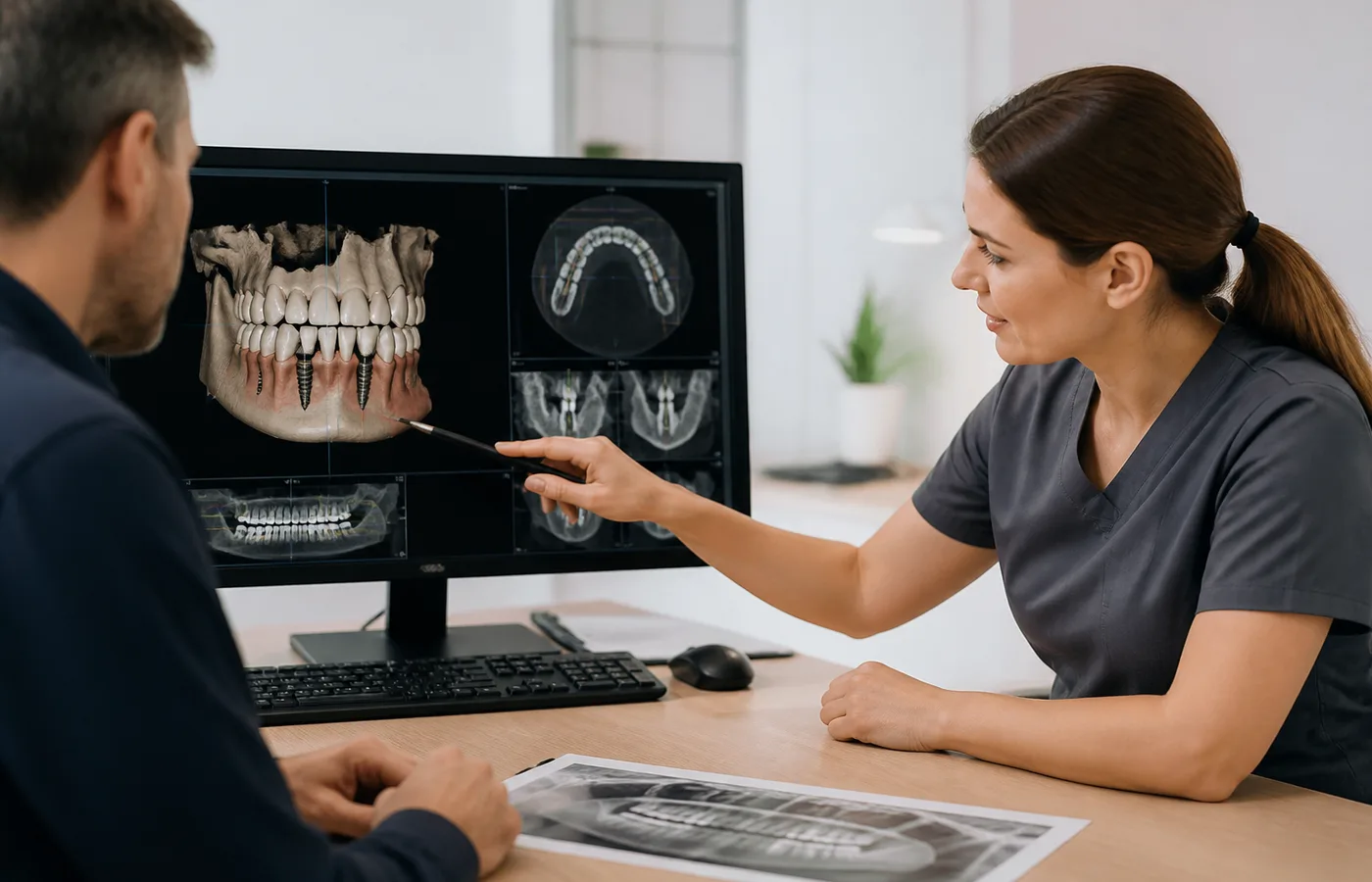
After the examination, imaging and general health review, any oral preparation considered necessary is addressed first. How extensive this stage is varies considerably between individuals.
The implant is placed into the jaw bone in the area deemed appropriate. The scope of the procedure depends on how many implants are involved and on the condition of the site. The anaesthesia method and the way the appointment is structured are decisions for the healthcare facility.
After placement, a waiting period is allowed for the implant to integrate with the surrounding bone tissue. The length of this period cannot be reduced to a single figure: the bone structure of the region, any additional procedures performed and the individual's own healing course all play a part.
Once healing is considered sufficient, the abutment is fitted and impressions are taken for the prosthetic component that will sit on it. Whether a crown, a bridge or a denture is appropriate depends on the plan. Because this stage usually involves laboratory work, it can extend across several appointments.
Although the same heading is used, the resulting plans rarely resemble one another:
Which of these fits your own case can only emerge from a clinical assessment.
In some situations, supporting the bone volume at the intended site may be raised. Approaches described as bone augmentation are not necessary for everyone, and whether they are used at all depends entirely on the clinical assessment. When such a stage is added to a plan, the overall duration and the number of appointments can differ from the first expectation. If you are travelling from abroad, this is the single most important piece of information when shaping your travel calendar.
For these reasons no fixed number of days or dates is given here; a calendar only becomes clear after an individual assessment.
Because a waiting period is inherent to implant treatment, planning is often spread across more than one visit. A common arrangement is for the surgical stage to be handled during one visit and the prosthetic stage during a second visit after healing. Some plans involve a different number of visits, and that is determined by the medical side.
LumiVita's role here concerns aligning calendars: matching flight dates with appointments, arranging airport transfers and accommodation, and maintaining communication between the two visits. You can read how the wider process works on our health tourism page.
Sensitivity, swelling or bruising may appear around the site early on, and how these progress varies from person to person. Following the facility's instructions on diet, oral hygiene and medication is the most decisive topic of this period.
Over the longer term, the health of the gum and bone tissue around an implant is associated with consistent care and regular review. Keeping to a brushing and interdental cleaning routine, continuing with follow-up appointments and observing the care protocol recommended by the clinic therefore matter.
How an implant behaves in the mouth does not depend on a single factor. Oral hygiene habits, the condition of the gum tissue, clenching or grinding habits, systemic conditions that are not well controlled and whether follow-up appointments are kept are the topics that stand out. Smoking is also frequently discussed in relation to healing and tissue health, which is why clinics ask about it specifically during assessment.
No dental work can be promised to last indefinitely. Outcomes differ from person to person, and only the dentist following your case can share an expectation specific to you.
An implant is a surgical procedure and, as with any surgical procedure, carries possible risks. Infection, a healing course that differs from what was expected, an implant not integrating sufficiently with the bone, matters concerning the surrounding tissues and adjustments needed at the prosthetic stage are among the topics that may be raised. What any of these means for your particular situation, which possibilities are most relevant and how they are managed can only be explained by the qualified dentist who examines you.
LumiVita does not examine, diagnose, prepare treatment plans, select physicians or promise results. Its remit is organisational: establishing first contact, passing on information received from the healthcare facility, aligning appointment and travel calendars, arranging airport transfers and accommodation, providing language support during communication, and keeping the conversation going after you return home.
If you would like to start that conversation, you can reach us through the free preliminary assessment form. Answers to the questions we hear most often follow in the frequently asked questions section below.
People who enquire about dental implants usually describe situations such as:
Which of these situations is suitable for implants is determined by a qualified dentist after an examination, any imaging considered necessary and a general health review. None of the circumstances listed here amounts to suitability on its own.
The points people most often highlight when researching include:
These points do not apply equally to everyone. Which approach suits an individual depends on the outcome of the clinical assessment, and outcomes differ from person to person.
The general sequence varies between facilities but usually includes:
The order, number and spacing of these stages can differ between individuals, and every decision rests with the qualified dentist.
Sensitivity, swelling or bruising may appear around the site in the first days, and how these progress varies from person to person. Following the facility's instructions on diet, oral hygiene and medication is decisive during this period.
The integration period cannot be tied to a single duration. Oral hygiene habits, smoking and general health may all influence it. Keeping to follow-up appointments matters so that the process can be monitored properly.
Recovery time and post-treatment recommendations may vary depending on your personal health condition and the method applied. Specific guidance is shared after a doctor's evaluation.
LumiVita does not make medical decisions; information comes from healthcare institutions and the process may vary by person.
Your application is received securely and reviewed for process coordination.
Transfer and accommodation steps are coordinated according to your preferences.
Communication support is provided during your stay in Türkiye.
Communication support continues after your return.
Treatment suitability and medical decisions are determined by authorised healthcare professionals.
Here are the questions we are asked most often about dental implants. The answers are general information only; an assessment specific to you can be made solely by a qualified dentist.
A single missing tooth, several missing teeth or a jaw in which no teeth remain can all be discussed under the heading of implants. Recognising your own situation in that list does not amount to suitability, however. An assessment looks at the condition of the jaw bone, gum health, any existing problems in the mouth, general health and the medication you take, all together. Only the qualified dentist who examines you can determine whether implants are appropriate; this content is not a substitute for that assessment.
An implant is intended to take over the supporting role of a natural tooth root, and it does so by relying on the bone tissue it sits in. That is why bone height, bone width and the distance to neighbouring anatomical structures in the region are core planning topics. The length of time since a tooth was lost can affect bone volume in that area. How the bone condition is assessed, and which additional stages might be discussed if needed, is something the qualified dentist determines after examination and imaging.
A waiting period allowing the implant to integrate with the bone is inherent to the process. Planning is therefore often spread across more than one visit: a common arrangement handles the surgical stage during one visit and the prosthetic stage during a second visit after healing. Some plans involve a different number of visits and different intervals. Only the healthcare facility assessing you can say how many visits will be needed. Once that calendar is set, LumiVita organises flights, transfers and accommodation around it.
Whether a temporary solution can be discussed during the waiting period depends on the plan and is not the same for everyone. In some cases temporary prosthetic options may be considered; in others the condition of the site may not be regarded as suitable for them. That decision rests with the qualified dentist, who takes into account where the missing tooth is, the state of the bone, any additional procedures performed and how healing progresses. Because this topic also affects travel planning, it is worth asking the facility directly at the first conversation.
The care plan is prepared by the healthcare facility treating you and usually covers diet, oral hygiene practices, medication and the timing of follow-up appointments. Maintaining a brushing and interdental cleaning routine is a point frequently emphasised for the health of the tissue around an implant. How follow-up will be handled once you return home also forms part of that plan. LumiVita provides no medical guidance during this period; it supports continued communication and the passing on of information.
Smoking is one of the topics discussed most often in relation to healing and the health of tissue inside the mouth, which is why clinics ask about the habit specifically during assessment. How any effect might present in your case, how decisive it is and what approach might be suggested before or after the process differs from person to person. Guidance specific to you on this subject can only come from the qualified dentist who examines you. Oral hygiene habits are assessed under the same heading.
There is no single factor. Oral hygiene habits, the condition of the gum tissue, clenching or grinding habits, systemic conditions that are not well controlled, smoking and whether follow-up appointments are kept are the topics that stand out. Care of the prosthesis and any adjustments made along the way also belong in that picture. No dental work can be promised to last indefinitely, and outcomes differ from person to person. An expectation specific to your situation can only be shared by the qualified dentist following your case.
LumiVita is not a clinic, hospital or physician. It does not diagnose, plan treatment, select doctors or guarantee results. Its support is limited to organising everything around the process: keeping the sharing of information and documents orderly, aligning appointment and flight calendars, arranging airport transfers and accommodation, providing language support during communication, and maintaining contact between two visits in staged plans. Every medical decision rests with qualified healthcare professionals. To start the conversation, you can use the free preliminary assessment form.
Share your key details and the LumiVita team will contact you about process, travel and organisation steps.