
Treatment Guides
How Is the Process Planned Before a Hair Transplant?
A coordination-focused guide to planning hair-transplant travel—without graft counts or guarantees.
LumiVita Editör EkibiApprox. 3 min
Read ArticleLumiVita provides professional travel and process coordination for international patients planning healthcare in Türkiye.
Hair transplantation is a surgical procedure in which follicular units taken from a person's own donor area are redistributed to thinning regions. Suitability, the cause of hair loss and overall health are assessed by qualified healthcare professionals. This page outlines the general stages, how a trip to Türkiye is planned, and what is discussed afterwards. Outcomes differ from person to person.

Hair transplantation is a surgical procedure in which follicular units are taken from the part of the scalp that tends to be more resistant to shedding and moved to areas that have thinned or opened up. The underlying logic is redistribution rather than creation: the follicles a person already has are repositioned. That distinction matters, because the density that can be achieved is always bounded by an individual's own donor supply.
This page does not diagnose, plan treatment or offer medical advice. It is written for someone researching the topic for the first time, to explain the general shape of the process, the questions worth raising with qualified healthcare professionals, and how the logistics of a health journey to Türkiye can be arranged. You can browse other subjects on our treatments overview.
Hair loss rarely has a single cause. Inherited predisposition, hormonal shifts, nutritional or vitamin imbalances, systemic conditions such as thyroid disorders, certain medications, sustained periods of stress and dermatological conditions affecting the scalp can all shape the picture differently. Two people whose hair loss looks similar in a photograph may need entirely different approaches.
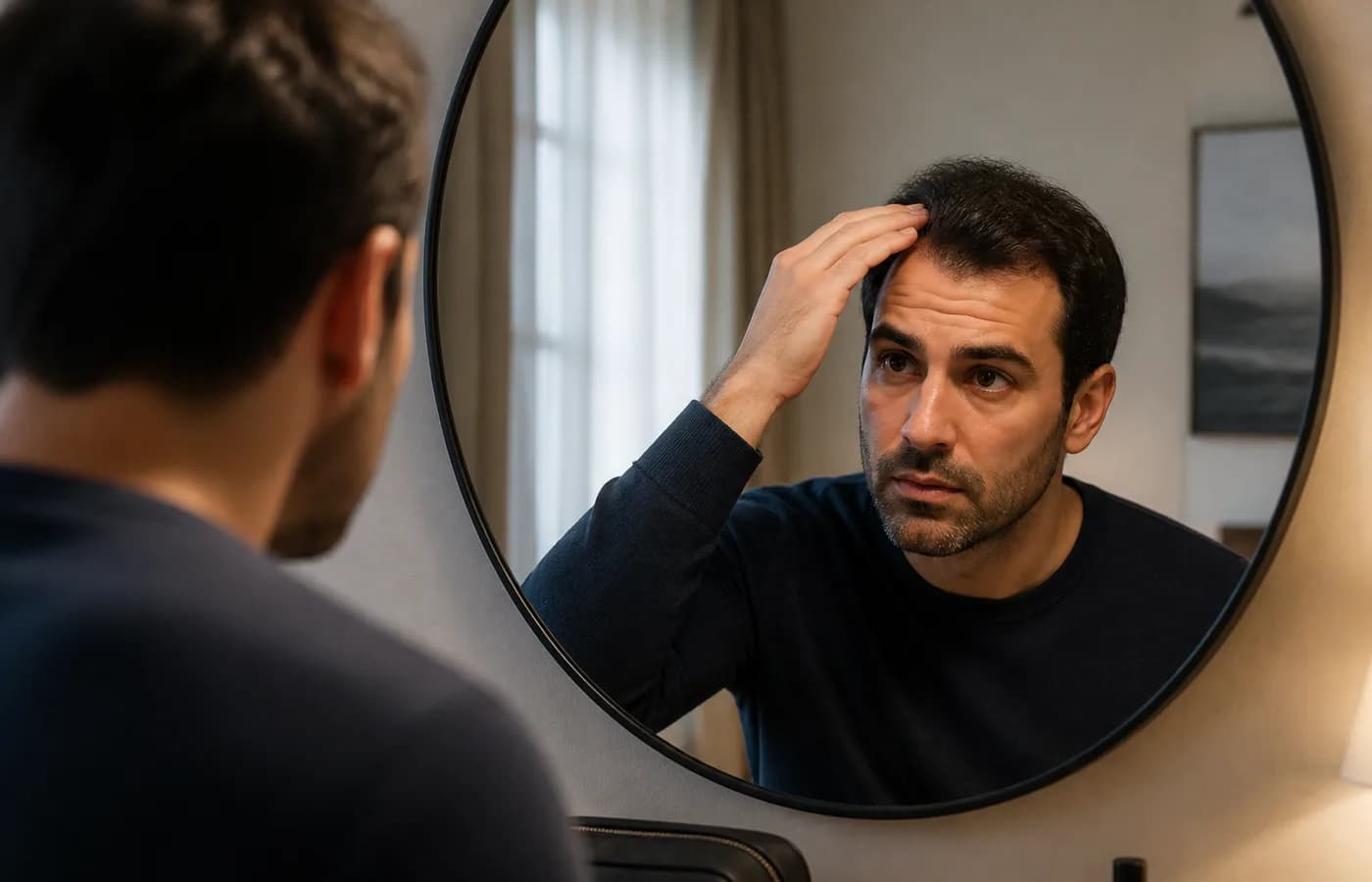
People typically begin researching after noticing thinning at the front or crown, a hairline that appears to be receding, or after a previous procedure that they would like reassessed. Researching, however, is not the same as being a suitable candidate. How far the loss has progressed, whether it is still active, and whether an underlying medical cause is present can only be established through examination and any tests deemed necessary.
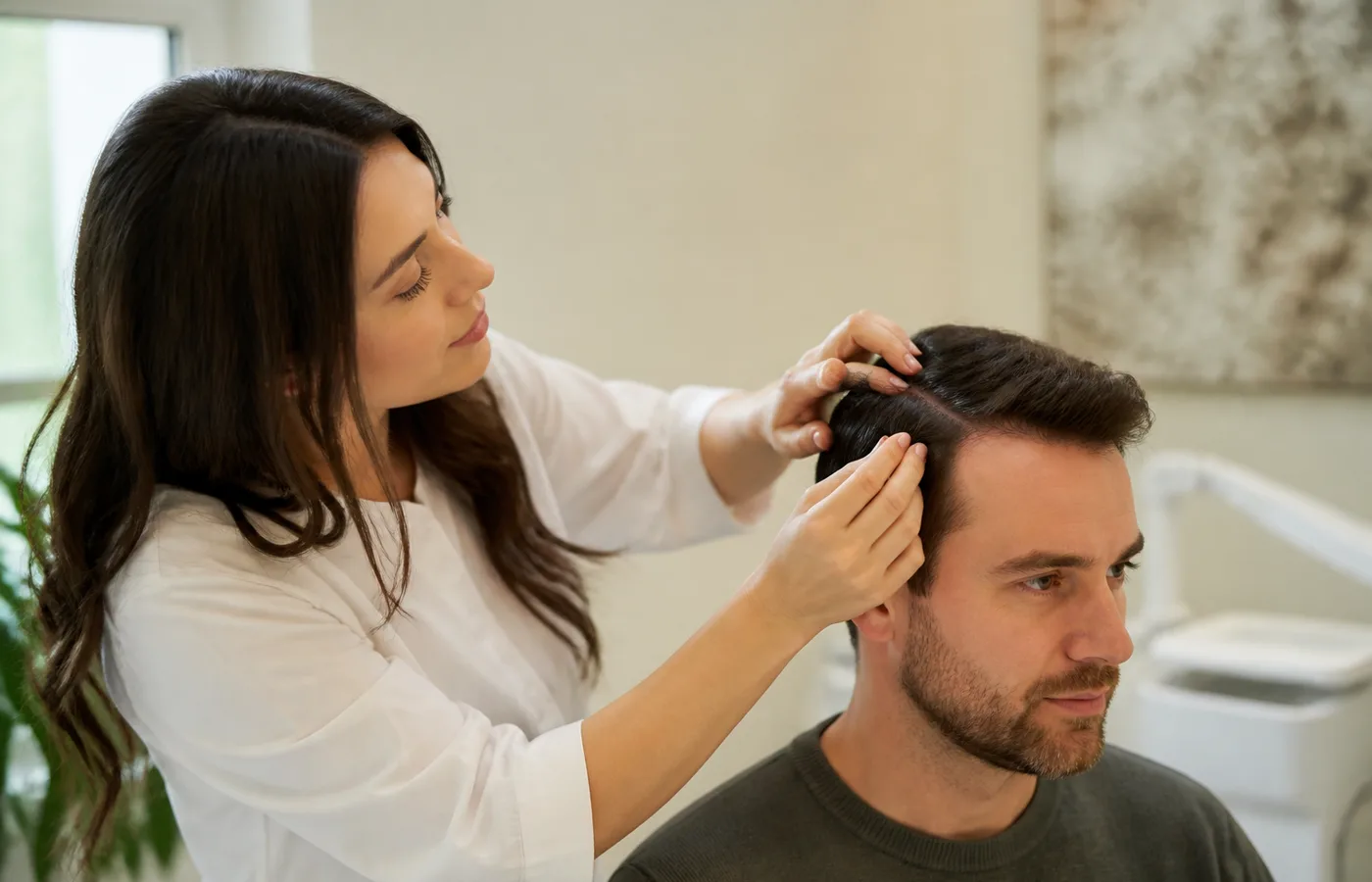
Only qualified healthcare professionals can determine whether someone is suitable. Assessment generally involves examining the scalp, studying the pattern of loss, reviewing medical history and current medications, and requesting laboratory tests where appropriate. Blood-thinning medication, uncontrolled chronic conditions, active scalp infections or anything affecting wound healing can change the plan considerably.
In some cases professionals may prefer to address an underlying cause before considering a surgical option at all. If shedding is active and progressing quickly, observing the situation for a period may be suggested. Decisions like these come from examination findings, not from articles read online.
The donor area is usually the region at the back and sides of the scalp, where follicles are considered more resistant to loss. Its density, hair calibre, the contrast between hair and skin colour, and scalp laxity are among the factors that frame what can realistically be planned. Donor supply is finite and does not regenerate, which is why how it is used is considered so carefully.
One person may be able to have a broad area addressed; for another, the same goal may not be realistic. The possibility that loss continues over the years is also weighed. How a plan made for today's appearance will look a decade from now is one of the things an experienced professional tries to anticipate.
The hairline is among the details that most strongly determine whether a result reads as natural. Facial proportions, forehead structure, the person's age, expression lines and the natural angle at which hair emerges are all considered together. A line placed too low, or one that is ambitious for someone's age, may look full at first while consuming donor supply that will be missed later.
This is not a matter of picking from a menu of options. It is a clinical judgement made by the professional who examines the person. The most useful thing a visitor can do at this stage is describe their expectations openly and ask for the reasoning behind the plan proposed.
Two abbreviations come up constantly in research: FUE and DHI. They are not competing products but general names for differences in technique during the procedure. Which approach suits whom depends entirely on the professional assessing the individual, and nothing on this page recommends one over another.
A general term for harvesting follicles individually from the donor area using fine instruments. The harvested units are then placed into recipient sites prepared beforehand.
Describes a way of working in which site creation and placement are carried out together using a pen-type implanter. The sequence and instruments differ, but the underlying principle is unchanged: a person's own follicles are redistributed.
Preparation is shaped by the instructions the healthcare facility provides. Declaring all medications and supplements, following guidance on alcohol and smoking, completing any requested tests and getting the scalp ready are typical elements. Loose, front-buttoning clothing is often suggested simply because it is easier to manage afterwards.
For international visitors, preparation is also a logistical matter. Aligning the appointment date with flights, choosing accommodation within a sensible distance of the facility and keeping the return plan flexible all make the trip less stressful.
Practice varies between facilities, but the broad sequence tends to be similar: a final review and confirmation of the plan, preparation of the donor area, local anaesthesia, harvesting of follicles, preparation of the recipient area and placement. Rest breaks during the day are common.
Afterwards, the team explains how to protect the scalp, how the first wash should be done and which signs warrant contacting the facility. Receiving these instructions in writing is particularly helpful for anyone returning to another country.
There is no standard duration. The size of the area being addressed, the characteristics of the donor region, the planned approach, general health and the facility's own working arrangements all play a part. Some plans are completed within a single day; others may be spread across separate occasions. Committing to a fixed duration in advance would be misleading — precise information comes from the facility making the plan.
A journey taken for health reasons works differently from a holiday. Leaving enough rest between the flight and the appointment, choosing accommodation with transport in mind, arranging transfers ahead of time and bridging the language gap with interpretation support all contribute to a calmer experience. If a follow-up appointment is planned, the return ticket needs to accommodate it.
Visas, travel insurance, passport validity and arrangements for a companion are worth addressing early. For a wider view of how the process works, see our health tourism page.
Sensitivity, redness, crusting or swelling of the scalp may occur in the early days. How these progress varies, and how they should be managed depends on the facility's instructions. Guidance on sleeping position, the washing routine, sun exposure and when to return to sport or heavy physical activity should be followed carefully.
Some of the placed hairs shedding during a certain period is a recognised possibility, though it does not present the same way in everyone. Whether it is expected in a given case, and whether it warrants concern, is for the professional providing follow-up to assess.
Hair follows a natural growth cycle, and change proceeds gradually. A result therefore takes shape over an extended period of observation rather than within a few weeks. No fixed date can be given; the timeline differs from person to person.
Donor quality, hair type and colour, whether loss is still progressing, general health, smoking, adherence to aftercare instructions and consistent follow-up all influence what happens. The same plan can produce different results in two people. Comparison images may be informative, but they are not a promise made to any individual.
As with any surgical procedure, risks exist: infection, healing problems, scarring in the donor or recipient area, density that differs from what was anticipated, and reactions related to anaesthesia are among them. The procedure also does not halt ongoing hair loss; existing hair may continue to change over time.
It is worth being cautious with any account that promises a specific outcome, timeframe or density. Realistic expectations are built on what the professional who examines you explains directly.
LumiVita is not a clinic, hospital or physician. It does not diagnose, plan treatment, select doctors or promise specific outcomes. What it does is organise everything around the process: keeping information sharing orderly, aligning appointment and travel calendars, arranging airport transfers and accommodation, and providing language support during communication. Every medical decision rests with qualified healthcare professionals. To start a conversation, you can use the free preliminary assessment form.
The topics people ask about most — how the process starts, why the donor area matters, how long a stay might be needed and how follow-up works — are gathered in the frequently asked questions section below. The answers are general information and do not replace an individual assessment by qualified healthcare professionals.
People who enquire about hair transplantation usually describe situations such as:
None of these on its own indicates suitability. The cause of the loss, how quickly it is progressing, the condition of the donor area and overall medical history are assessed through examination. Uncontrolled chronic conditions, active scalp problems or medication affecting bleeding can change the plan. Only qualified healthcare professionals can decide whether you are a suitable candidate.
The points people most often highlight when researching include:
These are general talking points rather than outcomes anyone can count on. Achievable density is bounded by donor supply, and results differ between individuals. Setting expectations realistically tends to be the single biggest factor in how satisfied someone feels afterwards.
The general sequence varies between facilities but usually includes:
The length and order of these steps depend on the individual plan. This content recommends no particular technique; the approach used is the healthcare professional's decision.
Sensitivity, redness, crusting or swelling of the scalp may appear early on, and how these progress varies from person to person. Following the facility's guidance on washing, sleeping position, sun protection and returning to physical activity matters throughout this period.
No fixed recovery timetable can be given. Attending follow-up appointments and keeping to the instructions provided support a smoother process.
Recovery time and post-treatment recommendations may vary depending on your personal health condition and the method applied. Specific guidance is shared after a doctor's evaluation.
LumiVita does not make medical decisions; information comes from healthcare institutions and the process may vary by person.
Your application is received securely and reviewed for process coordination.
Transfer and accommodation steps are coordinated according to your preferences.
Communication support is provided during your stay in Türkiye.
Communication support continues after your return.
Treatment suitability and medical decisions are determined by authorised healthcare professionals.
Here are the questions people ask most often about the hair transplant process. The answers are general information and do not replace an individual assessment.
It usually starts with an initial conversation covering when the hair loss began, how it has progressed, general medical history and current medications; recent photographs of the scalp may be requested. That information is then shared with qualified healthcare professionals for review. This first step is not a diagnosis or a treatment plan — suitability can only be determined after examination and any tests considered necessary. At this stage LumiVita helps keep information sharing organised, provides language support during communication, and aligns the travel calendar with the appointment once one is arranged.
That decision rests solely with the qualified healthcare professionals who examine the person. The condition of the scalp, the pattern of loss, the characteristics of the donor area, hair type and general medical history are weighed together, and tests may be requested. The technique names encountered online describe differences in approach rather than a ranking of one over another. LumiVita does not recommend techniques, make comparisons or steer the choice of physician. Asking for the reasoning behind a proposed plan, and describing your expectations openly, helps make the decision clearer for you.
The follicles used come from the person's own scalp; nothing is added from an outside source. The density of the donor area, hair calibre and the characteristics of the skin therefore set the boundaries of what can be planned. Donor supply is finite and does not regenerate, so how it is used is considered carefully. The possibility that hair loss continues over time is weighed as well. One person may be able to have a broad area addressed while, for another, the same goal is not realistic — that judgement belongs to the healthcare professional carrying out the examination.
There is no single standard. The scope of what is planned, the facility's own working arrangements, whether a follow-up appointment is scheduled and the person's general condition all affect it. Some plans are completed within one visit; others may be spread across separate occasions. Quoting a fixed number of days in advance would therefore be misleading — clear information comes from the facility making the plan. Once that is confirmed, LumiVita helps organise flights, accommodation and transfers so they fit the resulting calendar.
The timing depends on guidance from the facility that carried out the procedure. The state of the scalp, whether a follow-up appointment is scheduled and the person's general wellbeing all feed into it. For that reason, keeping the flight date flexible rather than fixing it rigidly in advance usually makes for a calmer experience. Any instructions about protecting the scalp during the flight, wearing headwear or seating arrangements should be followed. Once the facility's guidance is clear, LumiVita helps update ticket and transfer arrangements accordingly.
Hair follows a natural growth cycle and change proceeds gradually, so a result takes shape over an extended period of observation rather than within a few weeks. Some of the placed hairs shedding during a certain phase is a recognised possibility; it does not present the same way in everyone, and how it should be interpreted is for the professional providing follow-up to assess. No fixed date can be given — the timeline differs according to the individual, the characteristics of the donor area and general health. Assessing progress through regular follow-up appointments is the soundest approach.
No. The cause of hair loss differs between individuals: inherited predisposition, hormonal changes, nutritional imbalances, certain systemic conditions, medication or dermatological conditions affecting the scalp all produce different pictures. In some cases the priority may be addressing the underlying cause first. Active and rapidly progressing loss, insufficient donor capacity, uncontrolled chronic conditions or anything affecting healing can change the plan. Only the qualified healthcare professionals who examine you can determine whether you are suitable; this content is not a substitute for that assessment.
LumiVita is not a clinic, hospital or physician. It does not diagnose, plan treatment, select doctors or promise specific outcomes. The support it offers is limited to organising everything around the process: keeping information sharing orderly, aligning the appointment and travel calendars, arranging airport transfers and accommodation, and providing language support during communication. Every medical decision rests with qualified healthcare professionals. If you would like to start a conversation, you can get in touch through the free preliminary assessment form.
Share your key details and the LumiVita team will contact you about process, travel and organisation steps.